
OVERVIEW & PURPOSE
Musicology – Part 2 is not an add-on. It is a reset that reclaims Black culture as origin, not just influence. It centers Afrocentric ways of knowing, hearing, and remembering. This is musicology redesigned from lived experience, ancestral memory, and future imagination.
#TashFormula
This course resets Musicology Part 1 (Music Appreciation) and uses the Black continuum as a timeless bridge to shared empathy and understanding. By exploring my personal journey, one embedded in Black culture, I revisit the various imprints and recount personal anecdotes to engage the student. Through storytelling, visual examples, and recaps of interviews with musicians, students will be able to reflect on how influential artists have shaped not only how we dance and dress, but also how we see ourselves and move through the world today.
INTRODUCTION
Through #TashFormula, you are stationed temporarily inside my journey. What I share is a pit stop for you to refuel your vehicle. Dance without music for me is lifeless. It’s doable, but even if there is “no” music, there is a rhythm within me that my spirit hums to. It speaks to the soul, who speaks to the body; dance, sway, flow, repeat. If you have made it this far, you are truly one in a million.
In Musicology Part 1, we delved into music’s many genres and the iconic artists who left an indelible mark on history through their bodies of work. In the last few years, we have lost significant figures such as Tina Turner, Angie Stone, and Frankie Beverley. 2025 was particularly heavy with the loss of Roberta Flack, D’Angelo, Roy Ayers, Jellybean Johnson, and many more.
ANCESTRAL MEMORY
The passing of D’Angelo was really difficult for me, as he embodied everything I lived as a young adult in the ’90s. His music made us fall in love, made us think, made us cry, and especially, spoke to us. We became aware that Black emotional feelings and Black bodies were beautiful. We were still too young and unaware to fully enjoy the Blues or play the soulful tunes of our parents, but through him, we found a way to connect with the past. The new R&B made us slow down, rock our heads, and sing along to songs like Lady, Brown Sugar, and How Does It Feel.
We (Scramblelock and I) had to teach our Campbellocking classes at UEZ the same day D’Angelo passed away (Tuesday, October 14th, 2025). We both honored D’Angelo by replaying his music and sharing it with the students. I am sure they understood what music empathy was that day, the ability to feel and understand the emotions conveyed through music. It sure felt like that sad day.
To convey real feelings and real lore, we must center ourselves back into our own stories. You may be here because you are interested in Street Dance, but we are still undoing years of erasure to teach you. Please be patient. These stories cannot unfold without a bit of suffering seeping at their edges.
The Musicology Part 2 course will emphasize these segments.
Black Representation in Media: From Blaxploitation to Afrofuturism
- Representation & Visibility
- Blaxploitation: Power, Style, and Contradiction
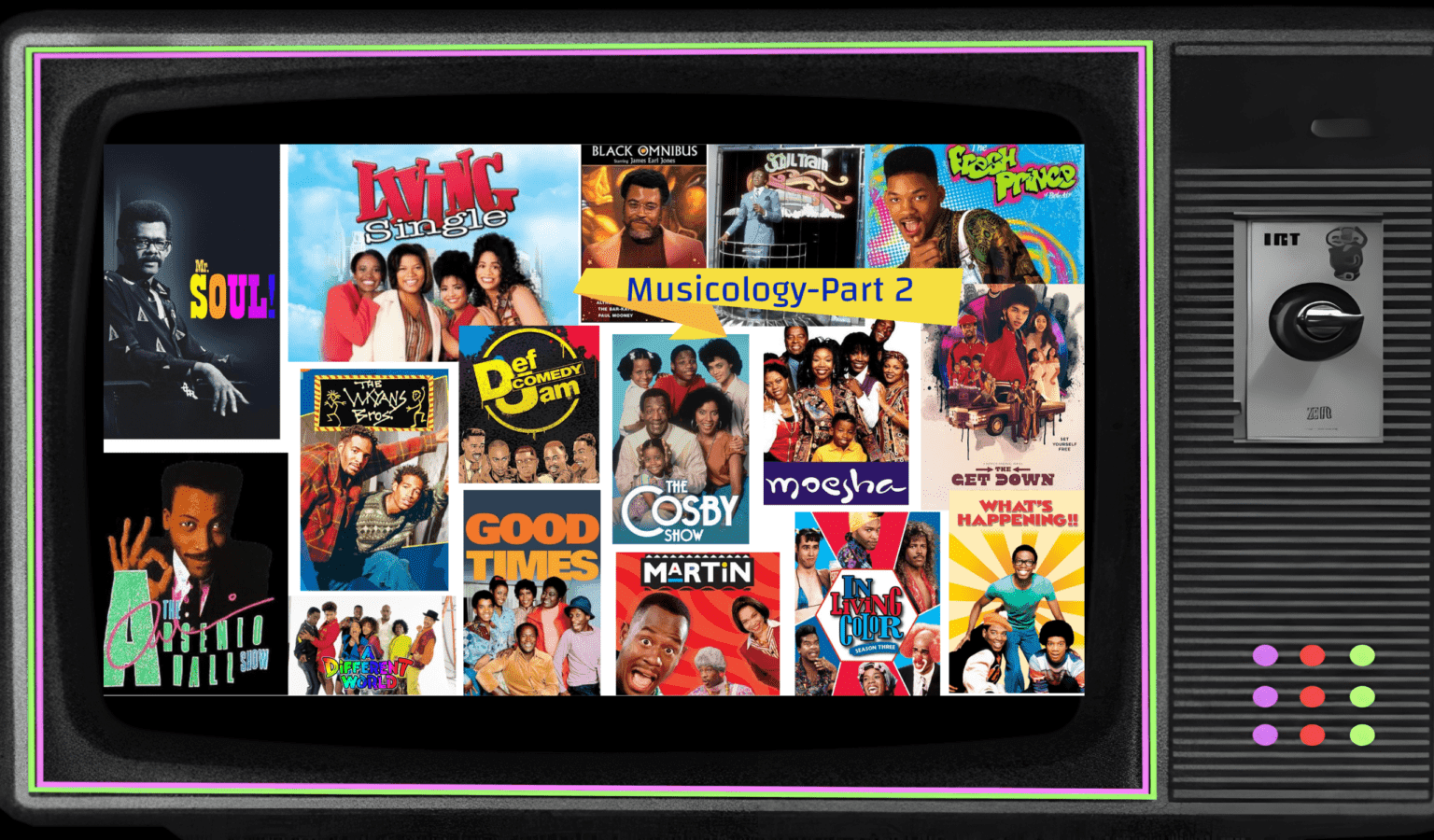
- Black Telivision as Cultural Education
- Afrofuturism: Reimagining Black Futures
Uplift: Music, dance, style, and black humor.
- Portraits: The Purple of Prince
- The Arsenio Hall Show
- Hidden Scripts; Code Switching
Portraits: Black Chronicles & Liberation
Storytelling is essential; it is the lore of Afrocentric culture, and it lies dormant in our genes. So the memory upload serves as one of the many foundations for this course. I will take you on a journey of the people, the ancestors, the iconic figures, alive or in spirit. THIS is how codes are transmitted. THIS is how we will reclaim MUSICOLOGY.
PRINCE’S – MUSICOLOGY
Prince had already started to reclaim his name. He fought his label. It reminds me of what could have been if Don could have fought for The Campbellock while alive. I think he’d be proud of us for giving it back the wings he always gave us.
Music’s a gift from God, and used properly, it can do many great things. – Prince
Thank you, Prince, for this reminder!
OBJECTIVES
- Decipher visual cues and cultural codes.
- Explore how Black-centric lives “in-formed” style/fashion and influenced mainstream popular culture.
- Strengthen understanding by cross-referencing various folkloric sources to the modern lifestyle.
- Re-examine the DNA of musical styles to reclaim Black ingenious narratives and identify key innovators who helped define and shape today’s styles and sounds.
- Research and reflect on historical and iconic cultural moments to better understand how Live music performances still empower and influence Street Dance.
*Don’t forget to take notes. Please don’t hesitate to email me if you need help with the content and/or if any links are broken.
ASSESSMENTS
Assessment Overview
There will be two quizzes and one final assessment at the end of the course, designed to support and reflect your understanding of the material and exercises from Musicology – Part 2. You are encouraged to use your notes as you complete the assessment and may submit notes, short written responses, or other relevant materials of your choice.
If you have questions at any point, feel free to reach out for clarification.
ACTIVITIES EXAMPLES
- Play and Listen Music Daily
- Crate Digging
- Go to your local library, dig into archival material.
- Check out a LIVE BAND
- Pick-up an Instrument
- Visit a Museum
- Make Beats
- Write Down Everything
- Use YouTube, Dailymotion, WhoSampled, and Internet Archive
- Binge on classic TV series, sitcoms, and late-night shows.
- Ask questions
Resetting Musicology from an Afrocentric core. © TashFormula — Musicology Part – 2
MANIFESTO
Musicology 2 is a reset.
It reframes how music is studied, understood, and transmitted by returning Black culture to its rightful position: the foundation.
For too long, musicology has been framed through Eurocentric systems that extract Black sound while erasing Black ways of knowing. Musicology 2 rejects this imbalance.
We do not ask for inclusion; we will be redesigning the structure.
Resetting musicology from an Afrocentric core.
© TashFormula — Musicology 2
EXPLORE TOOLS
Make Beats
Sample Research
Internet Archive
Other ressources
- Dailymotion
- PBS